
From crawling to reading, the future is agentic search
From crawling to reading, the future is agentic search

Max Monahan-Ellison
Max Monahan-Ellison
Head of Strategy, Agency 5S, AI-technology Board Member, and integrated marketing and communications specialist.
Head of Strategy, Agency 5S, AI-technology Board Member, and integrated marketing and communications specialist.
Search is changing faster than most content strategies can keep up with. For nearly two decades, digital visibility depended on systems that scanned, indexed, and ranked. Writers learned to optimize signals that helped machines identify relevance. Keywords, backlinks, and metadata formed the foundation of discoverability.
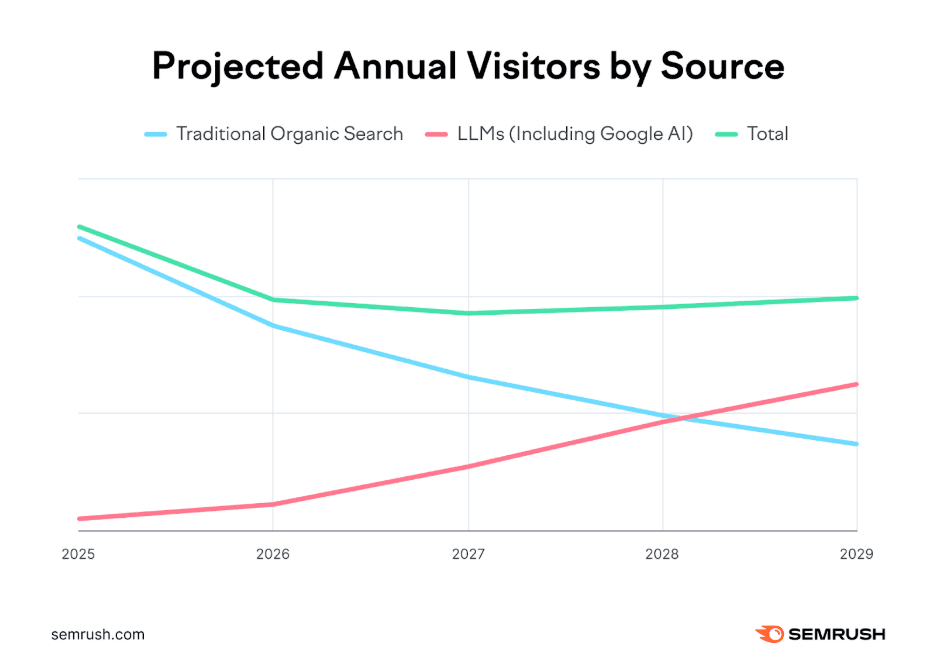
That world is shifting. AI-driven search engines are now read in a very different sense of the word. They interpret meaning, compare perspectives, and assemble answers by drawing from sources they consider credible. According to SEMrush, AI-generated answers may overtake traditional organic traffic within two to four years. This is not an incremental change. It is a structural one.
When machines begin to read, our responsibility as writers and strategists expands. Visibility is no longer about matching a keyword pattern. It is about producing ideas that a system can understand deeply enough to summaries or cite.
This is where the shift truly begins.
From Crawling to Reading
To understand what is changing, it helps to consider how traditional search actually worked. Classic SEO engines crawl content by scanning familiar markers. They could recognize patterns, but they could not interpret nuances. Their job was to organize information, not to understand it.
Agentic search systems behave differently. They analyze intent, context, and logical coherence. They read with a goal in mind, then determine which ideas deserve to be elevated in an answer. As a result, the writer’s task evolves. We are no longer producing content for a mechanical crawl. We are producing the thinking that an intelligent system can process, evaluate, and trust.
This shift naturally leads to a bigger question. If AI search engines are reading, not scanning, then what does modern visibility look like? What should we optimize for now?
To answer that, we need a new structure.
The New Framework for Visibility
The industry has historically leaned on SEO as the primary lever for search performance. That foundation still matters, but search has grown into a multi-layered ecosystem. Instead of one discipline, we now operate across four complementary layers of discoverability.
Each layer builds on the previous one. None replaces what came before. Together, they reflect on how people and machines find, understand, and cite information today.
Layers | Focus and purpose |
|---|---|
Search engine optimization (SEO) | Ensures your content is found |
Answer engine optimization (AEO) | Ensures your content is understood |
Generative engine optimization (GEO) | Ensures your content is cited |
AI optimization (AIO) | Ensures your content is integrated into agent workflows |
Seeing these layers together helps us recognize that visibility is no longer a one-dimensional path. It is an ecosystem. And writing that supports this ecosystem must be clear enough for humans and structured enough for intelligent systems.
So how do we actually write in a way that meets these expectations?
How to Write for AI Comprehension
Writing for agentic search is not about technical tricks. It is about producing ideas that are easy to understand, easy to trust, and easy to extract. Below are the principles that consistently help both humans and AI read more effectively.
1. Think in Concepts, Not Keywords
Modern search engines interpret meaning. They infer relationships, themes, and contextual links. Focus each piece on a central idea and let related concepts naturally support it. Use real language, not engineered phrasing. Clear thinking produces clear signals.
2. Lead with Clarity
State your argument early. Search engines priorities content that answers a question directly before diving into detail. A clear opening makes your ideas more quotable and more useful.
3. Priorities Context and Authority
Credibility matters. Include named experts, sourced data, examples, and citations. AI agents elevate content that demonstrates knowledge and accountability. Authority is no longer implied. It needs to be evidenced.
4. Structure for Humans and Machines
Readable content is performative content. Break ideas into sections. Use headings, lists, tables, and short paragraphs. Each segment should stand on its own, so it can be referenced without losing meaning. A good structure helps humans scan and helps machines understand.
5. Strengthen Authorship
AI models increasingly value identifiable expertise. Use real names, roles, and credentials. When content comes from a recognizable thinker, it becomes more trustworthy and more likely to surface.
6. Integrate External Endorsements
Media mentions, awards, and citations reinforce credibility. AI agents use these signals to confirm that the writer or organization is reliable.
Preparing for What Comes Next
Writing for agentic search is ultimately a shift in mindset. It encourages us to communicate with more precision and more intention. These are the same qualities that help human readers absorb information more quickly.
Research from Gloria Mark at the University of California Irvine shows that our attention span on a single screen averages 47 seconds today. We are not less attentive, but we are processing more information more often. This makes clarity an advantage for both audience and algorithms.
As we move into an era where AI systems read, reason, and recommend at scale, the quality of our thinking becomes directly tied to the visibility of our work. Writers who adapt will be cited. Writers who do not are overlooked, even if their ideas are strong.
The future of visibility will belong to those who communicate with clarity, context, and credibility. And that future is arriving quickly.
Search is changing faster than most content strategies can keep up with. For nearly two decades, digital visibility depended on systems that scanned, indexed, and ranked. Writers learned to optimize signals that helped machines identify relevance. Keywords, backlinks, and metadata formed the foundation of discoverability.
That world is shifting. AI-driven search engines are now read in a very different sense of the word. They interpret meaning, compare perspectives, and assemble answers by drawing from sources they consider credible. According to SEMrush, AI-generated answers may overtake traditional organic traffic within two to four years. This is not an incremental change. It is a structural one.
When machines begin to read, our responsibility as writers and strategists expands. Visibility is no longer about matching a keyword pattern. It is about producing ideas that a system can understand deeply enough to summaries or cite.
This is where the shift truly begins.
From Crawling to Reading
To understand what is changing, it helps to consider how traditional search actually worked. Classic SEO engines crawl content by scanning familiar markers. They could recognize patterns, but they could not interpret nuances. Their job was to organize information, not to understand it.
Agentic search systems behave differently. They analyze intent, context, and logical coherence. They read with a goal in mind, then determine which ideas deserve to be elevated in an answer. As a result, the writer’s task evolves. We are no longer producing content for a mechanical crawl. We are producing the thinking that an intelligent system can process, evaluate, and trust.
This shift naturally leads to a bigger question. If AI search engines are reading, not scanning, then what does modern visibility look like? What should we optimize for now?
To answer that, we need a new structure.
The New Framework for Visibility
The industry has historically leaned on SEO as the primary lever for search performance. That foundation still matters, but search has grown into a multi-layered ecosystem. Instead of one discipline, we now operate across four complementary layers of discoverability.
Each layer builds on the previous one. None replaces what came before. Together, they reflect on how people and machines find, understand, and cite information today.
Layers | Focus and purpose |
|---|---|
Search engine optimization (SEO) | Ensures your content is found |
Answer engine optimization (AEO) | Ensures your content is understood |
Generative engine optimization (GEO) | Ensures your content is cited |
AI optimization (AIO) | Ensures your content is integrated into agent workflows |
Seeing these layers together helps us recognize that visibility is no longer a one-dimensional path. It is an ecosystem. And writing that supports this ecosystem must be clear enough for humans and structured enough for intelligent systems.
So how do we actually write in a way that meets these expectations?
How to Write for AI Comprehension
Writing for agentic search is not about technical tricks. It is about producing ideas that are easy to understand, easy to trust, and easy to extract. Below are the principles that consistently help both humans and AI read more effectively.
1. Think in Concepts, Not Keywords
Modern search engines interpret meaning. They infer relationships, themes, and contextual links. Focus each piece on a central idea and let related concepts naturally support it. Use real language, not engineered phrasing. Clear thinking produces clear signals.
2. Lead with Clarity
State your argument early. Search engines priorities content that answers a question directly before diving into detail. A clear opening makes your ideas more quotable and more useful.
3. Priorities Context and Authority
Credibility matters. Include named experts, sourced data, examples, and citations. AI agents elevate content that demonstrates knowledge and accountability. Authority is no longer implied. It needs to be evidenced.
4. Structure for Humans and Machines
Readable content is performative content. Break ideas into sections. Use headings, lists, tables, and short paragraphs. Each segment should stand on its own, so it can be referenced without losing meaning. A good structure helps humans scan and helps machines understand.
5. Strengthen Authorship
AI models increasingly value identifiable expertise. Use real names, roles, and credentials. When content comes from a recognizable thinker, it becomes more trustworthy and more likely to surface.
6. Integrate External Endorsements
Media mentions, awards, and citations reinforce credibility. AI agents use these signals to confirm that the writer or organization is reliable.
Preparing for What Comes Next
Writing for agentic search is ultimately a shift in mindset. It encourages us to communicate with more precision and more intention. These are the same qualities that help human readers absorb information more quickly.
Research from Gloria Mark at the University of California Irvine shows that our attention span on a single screen averages 47 seconds today. We are not less attentive, but we are processing more information more often. This makes clarity an advantage for both audience and algorithms.
As we move into an era where AI systems read, reason, and recommend at scale, the quality of our thinking becomes directly tied to the visibility of our work. Writers who adapt will be cited. Writers who do not are overlooked, even if their ideas are strong.
The future of visibility will belong to those who communicate with clarity, context, and credibility. And that future is arriving quickly.